MAICO THIESEN

Senior Technical 3D Footwear Developer
Transforming concepts into production-ready products
Specialized in outsole engineering, injection molding, and digital footwear development.
Over 22 years of experience supporting brands from concept to manufacturing.

3D Development for Injection & Additive Manufacturing
Traditional upper development is based on physical pattern making and manual adjustments.
In fully injected or 3D printed footwear, these principles must be translated into digital models while preserving fit, comfort, and structural behavior.
Designing uppers directly in 3D without understanding traditional construction often results in poor fit, incorrect pressure zones, and unrealistic geometries.
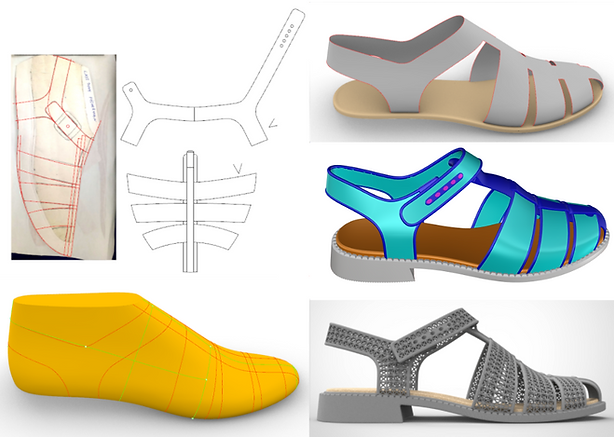
My work combines traditional upper development knowledge with advanced 3D modeling techniques.
Each project is developed considering:
-
Last geometry and anatomical fit
-
Tension areas and flex zones
-
Surface transitions and structural behavior
-
Adaptation for injection and additive manufacturing
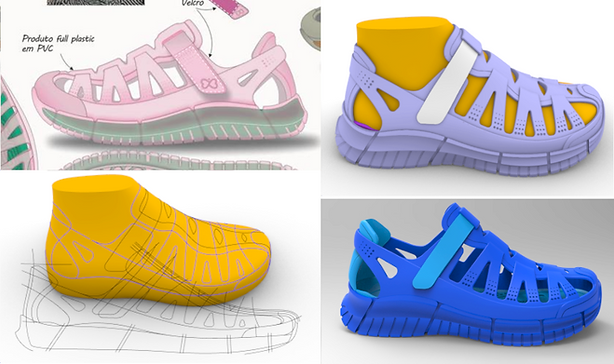
The upper was fully developed in 3D, considering material behavior, wall thickness, and structural requirements for injection molding.
Special attention was given to comfort, flexibility, and correct fit.
Injected PVC Sandal – Full Upper Development
Different materials and construction systems require specific adaptations in upper modeling.
These examples demonstrate how the same technical principles are applied across different products.


My background in manual upper modeling allows me to understand how footwear is built physically.
This knowledge is essential to create digital models that behave correctly in real production.
-
Wall thickness control
-
Flexibility vs structural stability
-
Transition between upper and sole
-
Material behavior under stress
-
Production-ready 3D shoes
-
Accurate fit and improved comfort
-
Consistent behavior across different materials
-
Digital models aligned with real manufacturing processes

